SiddharthaThe Warrior Prince

A novel by Kyra Pahlen

Siddhartha standing over a fallen Kosalan above the river gorge, the war elephants below

The book everyone thinks Hermann Hesse wrote.

The novel everyone assumes exists

Hesse's Siddhartha is not about the Buddha. This is.

Hesse's novel follows a fictional monk whose life reflects the one led by Gautama Buddha according to Buddhist parables. Siddhartha Gautama never appears in it. Readers have assumed otherwise for decades.

This is the only literary novel to tell the prince's life from the critical sources, while drawing the essence from the legends: the man before the Enlightenment, written as a political and psychological drama.

The book

Not a spiritual parable. An epic novel of a warrior prince moving through rival kingdoms, caste warfare, political intrigue and intimate human love, driven by grief, rejection of the human condition and the one question that defines him: why.

It opens not with Siddhartha but with Lotus, a Chinese noblewoman whose mystical gift compels her to Lumbini to witness the prince's birth. We discover countries and lifestyles through her eyes. When Siddhartha's mother dies at a later date, Lotus becomes his guide, and her son Chandaka becomes his charioteer and confidant.

The middle arc reconstructs Siddhartha's formation in sixth-century northern India. He excels in archery and statecraft, marries, becomes a father, but stays restless, asking questions his world cannot answer. And then tragedy strikes. The final third follows his departure, his teachers, and the night beneath the Bodhi tree, rendered as psychological drama rather than miracle. It closes with the first teaching at Benares, witnessed by those he left behind, and the impact on his friends, family and enemies.

Three passages

The Battle

Chapter two, pages 30 to 32. The Sakyan army crosses into Kosalan territory

The armies were marching towards each other. The Kosalan contingent stopped at the edge of the plateau, a strategic point affording a view of the enemy's every move. The Kosalan foot soldiers held the front line with deadly spiked chariots. Directly behind them, the cavalry waited by the armored elephants, who looked like lethal gray towers of metal. On the other side of the stream, the Sakyan army advanced across the vast gully. The cavalry, led by Siddhartha, his father, and Ananda, crossed the stream into Kosalan territory.

The Kosalan army remained immobile.

Sudodana didn't like it. Why wasn't Prasenadi reacting? He seemed hypnotized by the Sakyan forces, like a cobra hearing the compelling notes of a flute. The Sakyan king definitely didn't like it.

"Ananda," the King beckoned to the young man, his voice heavy. "We've crossed into his kingdom and Prasenadi just stands there, aloof, like Brahma on his cloud. What is that old fox up to?"

Ananda unsure how to respond looked to Siddhartha, who answered. "He has no honor, father, but he knows strategy."

As Siddhartha spoke those words, he looked around him: the Sakyan army was bunched together in the gully between the stream and the embankment of the plateau.

"Brahman!" Siddhartha cried. "We're heading into a trap!"

Read the full passage
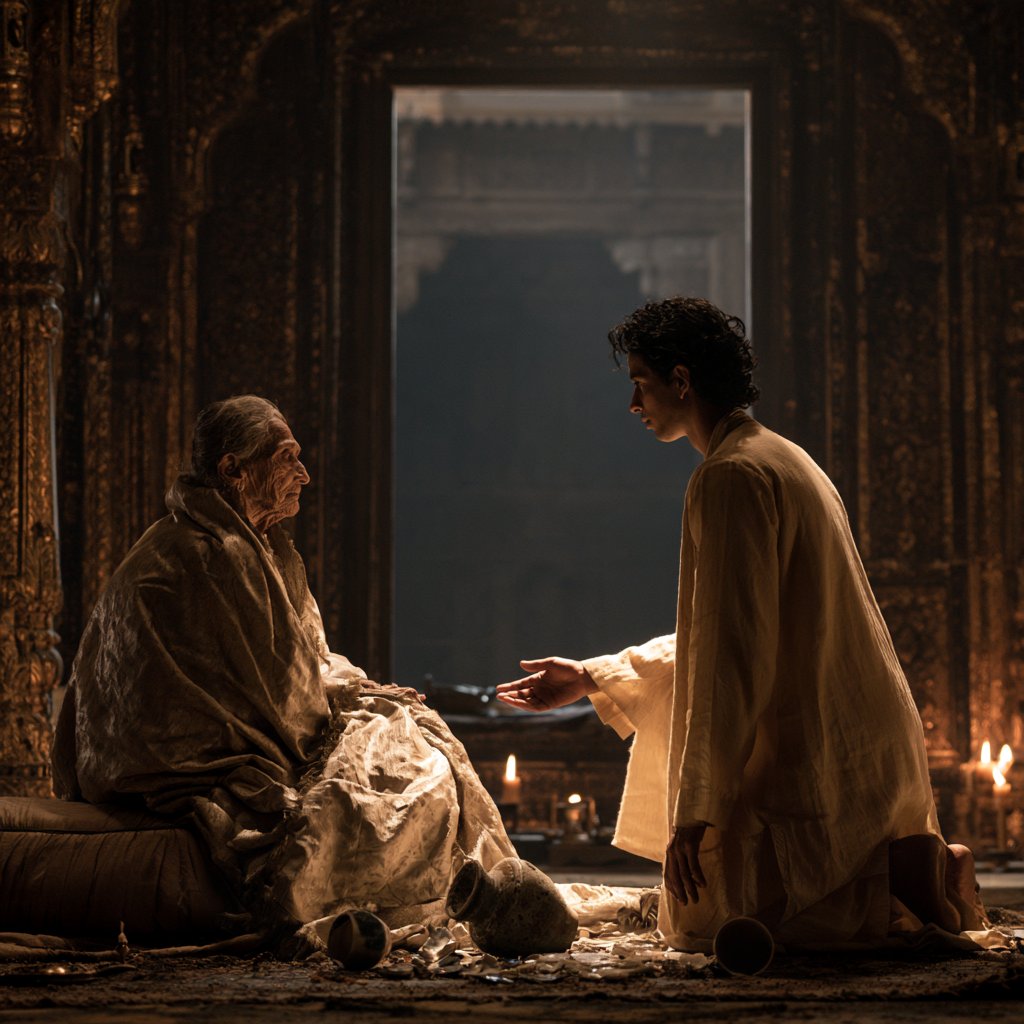
Siddhartha kneeling before his old nurse Poshika

Poshika

Chapter five, pages 39 to 41. Encounter with his old nurse

"Wait, I cannot just let you go in," he whispered forcefully. "It is my duty to tell you that your presence here goes against all the court edicts, and customs. The King will be very angry, and I'm really not so sure it is a good idea..."

Siddhartha ignored the last-minute plea and opened the door.

A few candles threw a dim light on the stagnating surroundings. They entered a small, clean, barren room with a big window facing the interior of the courtyard. The room was dreary, all of it in shades of brown. A small neat bed stood in the corner. Poshika, Siddhartha's old nurse, lay there in silence, covered by a heavy silk blanket.

As she became aware of their presence, the old woman slowly shuffled to her feet, a movement she accomplished with great effort. Traces of her former beauty still remained, but her extreme frailty and the pain she endured was evident to the youths. Squinting with difficulty, she finally recognized the Prince, and her eyes lit up with tenderness. From years of serving the Kshattriya, the old nanny instinctively reassumed her role, and stuttered, totally flustered by his presence.

She bowed to Siddhartha. Her back, unable to take the exertion, caused her to wince in pain. "Oh! My Prince, here! There must be something I can get you... Uhmm... Uhmm... a herb infusion? Would you like some of the brew I made...?" she mumbled.

Chandaka closed his eyes so as not to witness the pathetic display of weakness, so alien to his temperament. Siddhartha was tongue-tied, as a chaotic array of heart-wrenching emotions flashed over his taut face.

Siddhartha remembered Poshika's warm scent against his skin. She used to be so beautiful. For years he had wondered how long her hair was. She used to wear it in a braid circling her head so that it stood upright like a crown. One day when he walked in on her, she was standing in the middle of the room, her hair flowing to the floor and across the white marble in dark black waves rippling like a sea dragon. Thereafter in his childhood dreams she became a water goddess, who commanded a sea dragon at her fingertips.

Poshika scurried over to a large ceramic pot, took a cup in one trembling hand, grabbed the pot with the other, and attempted to pour a cup of herbal brew. Her efforts were in vain; she poured the scalding water on her hand and let both the pot and the cup fall to shatter on the ground. The sound of the impact sent shock-waves through the youths. Feeling utterly foolish, Poshika hugged herself tightly, then sat down on the bed, desolate, and cried softly in embarrassment.

Read the full passage
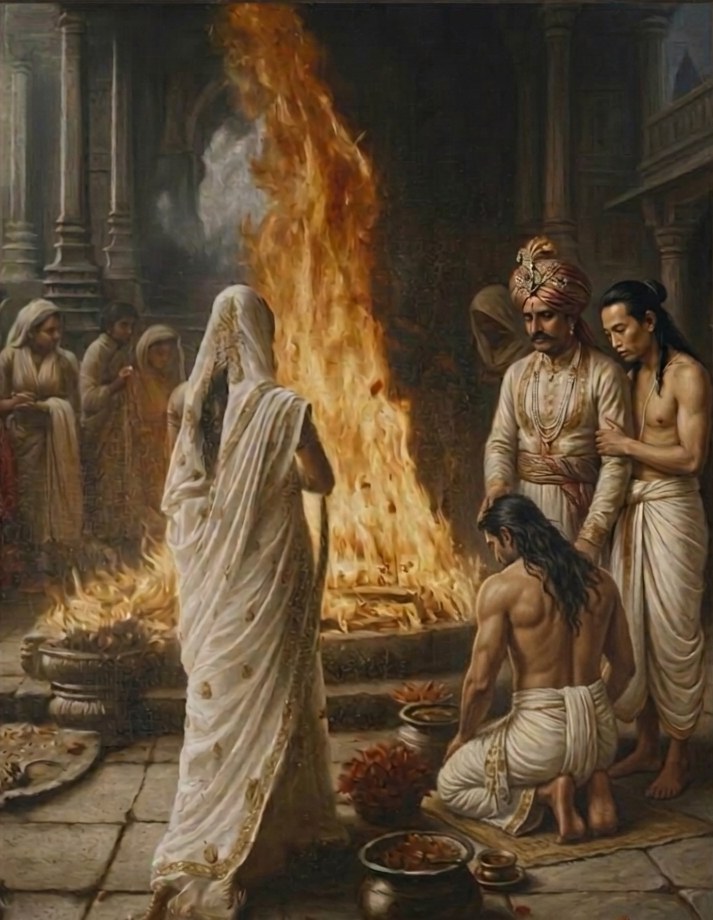
Siddhartha kneeling and weeping before the funeral pyre

The Departure

Dawn at the city gates, and the parting with Kantaka

Once one's mind is made up, action becomes easy; and once again, Siddhartha's face and manner had become animated, alive. The dam had burst and no one knew what would happen to him now. He had said he would leave the palace to devote himself to seeking a solution for one and all, to find Nirvana. It was hard for Sakya to believe in the existence of a solution.

The cocks crowed. Ananda, not having slept a wink, was leaning on his windowsill overlooking the courtyard, waiting for a last glimpse of his childhood companion; the chameleon that he always knew Siddhartha to be.

The clouds scattered to reveal a clear sky, announcing the beauty of a splendid day. The few remaining inhabitants of the palace were fast asleep, deep in their dreams. The courtyard was strewn with the ashes from the night before. The odor of fire still lingered in the crisp morning air and the birds were singing, unaware of the wheels turning.

Siddhartha and Chandaka, who always knew where to be, destined to always identify, open the door, to show the direction for the first step, emerged from the stables on their horses. Ananda watched them pass through the city gates at a leisurely pace, the morning mist wrapped around them like a magic cloak. Ananda's heart was beating hard; he knew that the stakes were unprecedented.

Leaving the city behind, Siddhartha and Chandaka rode through the green valley, side by side, without a word; up across a river's foaming torrents, to the foot of the nearest mountain.

As the mountains rose before them, Siddhartha stopped and dismounted. He walked around to his horse's head, and wrapped his arms around Kantaka's neck. The horse's soft eyes looked at him with infallible instinct. The trust and loyalty shared, the harmony trained and gained between them, made separation so difficult. The faithful animal was so confused at the desertion.

Siddhartha took off his clothes and jewelry. He and Chandaka looked at each other, but no conversation was necessary. Once stripped to his bare red dhoti, Siddhartha handed all his possessions, except for his dagger, over to Chandaka.

"Take these. I have no more use for them," said Siddhartha, calm and resolute.

Chandaka obeyed taking the material goods. Siddhartha turned around to face the mountains, his eyes clear as the sky before them. Taking his knife in hand, he hacked away at his long hair which fell to the ground like shining stars of granite. Kantaka, frightened at his master's increasingly strange behavior, pawed the ground, neighing softly. Siddhartha, his ritual finished, handed Chandaka the dagger. He turned back to his beloved horse, and lovingly caressed the animal's soft muzzle, thinking of how courageously Kantaka had gone into battle, because he trusted his master to bring him to no evil and take care of him forever.

"He knows I have to leave him," Siddhartha's voice trembled, the bond between him and Kantaka went into his very roots.

Read the full passage

Why I wrote this book

My childhood was populated by the gods and heroes of world mythology. They were the characters I liked best, because they represented the maximum and the minimum of what we humans are. Athene, Thoth, Amaterasu, Baba Yega, the fire horse. The abode of the eastern divinities was one of my favorites, and in the center of that realm reigned a marvelous entity, the Buddha.

Then you grow up. You learn science, physics, history, and a schism opens between what the heart wants to believe, which is part of the intuitive process, and what the intellect will accept. Years went by and I reached a point where I believed in everything and in nothing. The leaps and bounds of the intellectual world filled me with wonder but did not remove the soul-void.

So why a novel on the Buddha? Because I sensed there was a connection between law, physics, emotions, music and the Enlightenment.

The research, and Professor André Bareau

I built the historical spine of this novel between the late 1980s and 1992 with Professor André Bareau, who held the chair of Buddhist Studies at the Collège de France from 1971 to 1991 and was director of studies in Buddhist philology at the École Pratique des Hautes Études.

His Recherches sur la biographie du Buddha remains the most serious attempt ever made to trace how the legend of the Buddha was assembled, reading the sūtras preserved in Sanskrit, Pali and Chinese against the monastic codes of the different Indian schools, and establishing which episodes are early and which were added centuries later.

I spent days with him in Paris, going through the steps that led him to those conclusions. They were the key to the Buddha's life finally making sense as a human story.

Others novelized the legend. I wrote from the layer underneath it.

Praise

Fascinating, entertaining, fun to read and smart. A truly rare book. Kyra Pahlen has made the life of Buddha accessible to everybody. A must. Barbara Taylor Bradford, A Woman of Substance
Kyra Pahlen does for the Buddha what Grantland Rice did for the Gipper, makes a legend come to life. Larry Collins, Is Paris Burning?
Very well written. I am personally very supportive of your work. Lodi Gyari, Special Envoy of His Holiness the Dalai Lama to Washington D.C.

Society of Writers UN Award of Excellence, whose previous recipients include Norman Mailer, Mikhail Gorbachev, Gloria Steinem and Erica Jong. Foreword by Lama Gangchen.

Six editions, three languages

Spain, Central and South America, the German-speaking countries and France, with more than 60,000 tracked copies sold. France alone sold about 35,000.

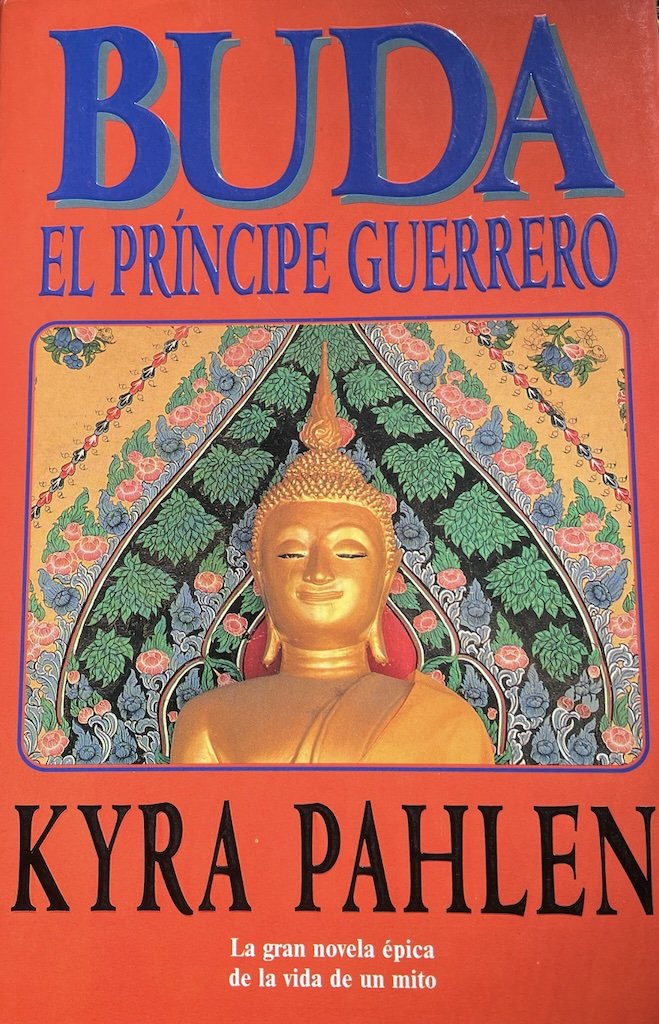
Buda, El Príncipe Guerrero, Ediciones B
Ediciones BSpain, first printing
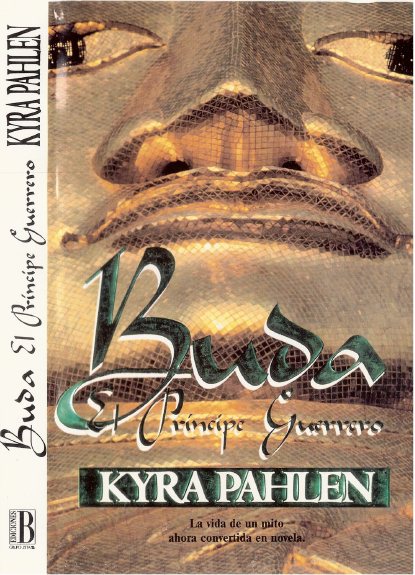
Buda, El Príncipe Guerrero, Ediciones B second edition
Ediciones BSpain, second printing
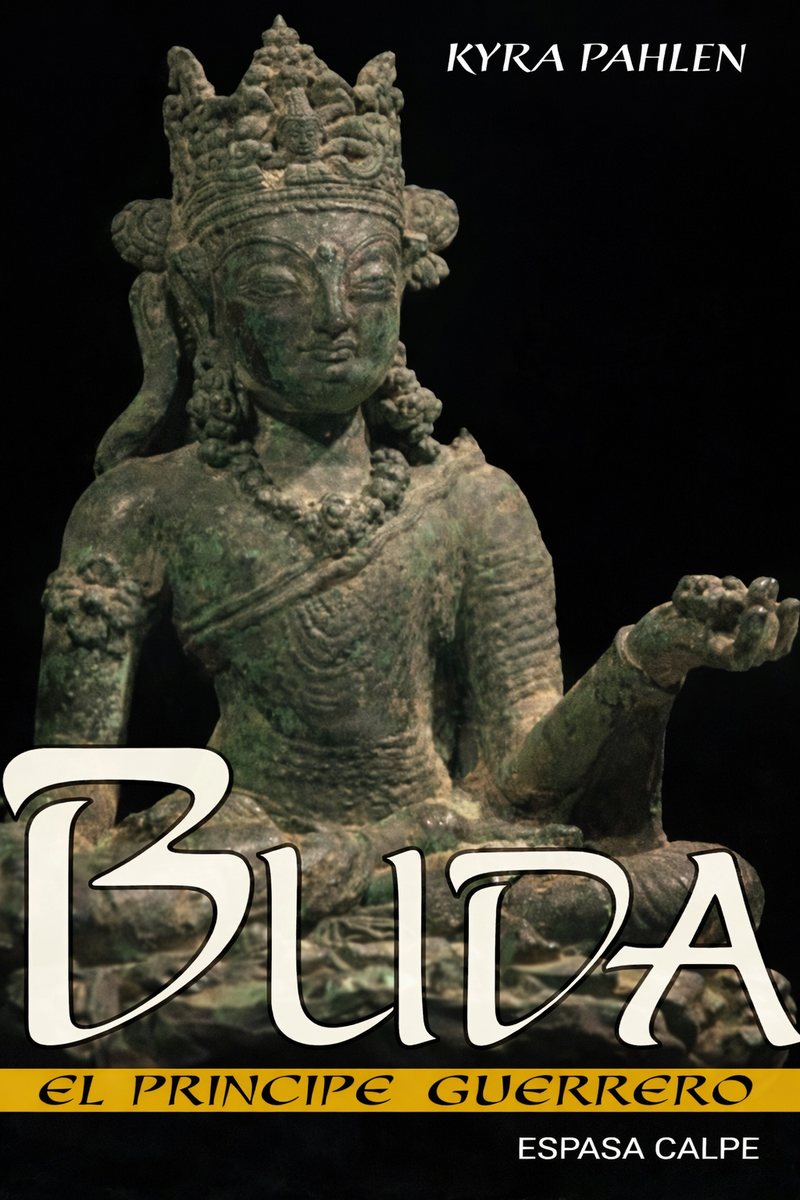
Buda, El Príncipe Guerrero, Espasa Calpe
Espasa CalpeArgentina and Latin America
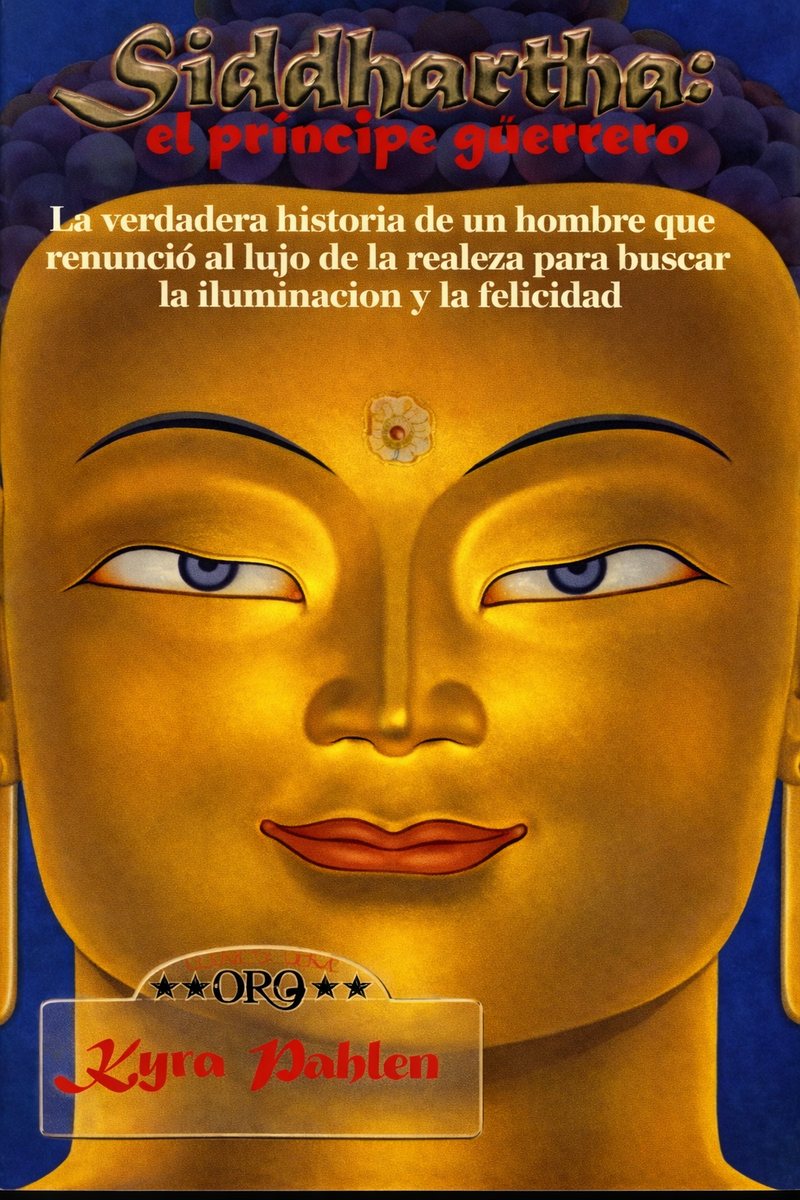
Siddhartha, el príncipe guerrero, Planeta
PlanetaMexico and Central America
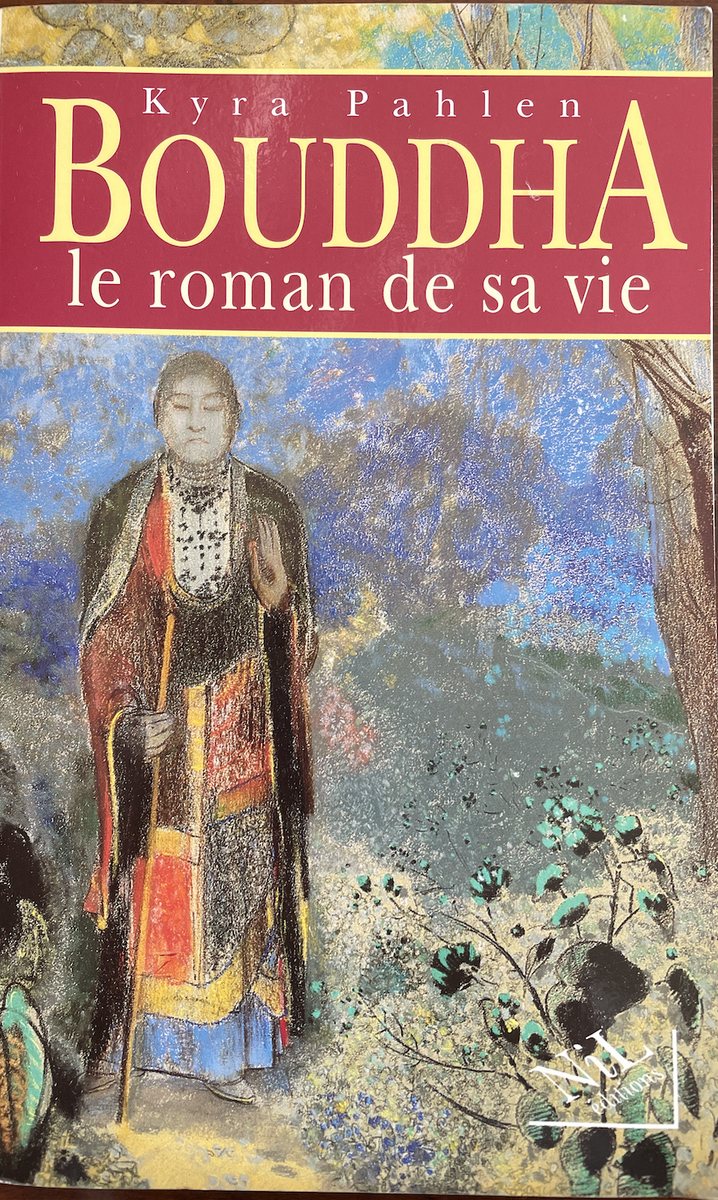
Bouddha, le roman de sa vie, Nil éditions
Nil éditionsFrance and French-speaking countries
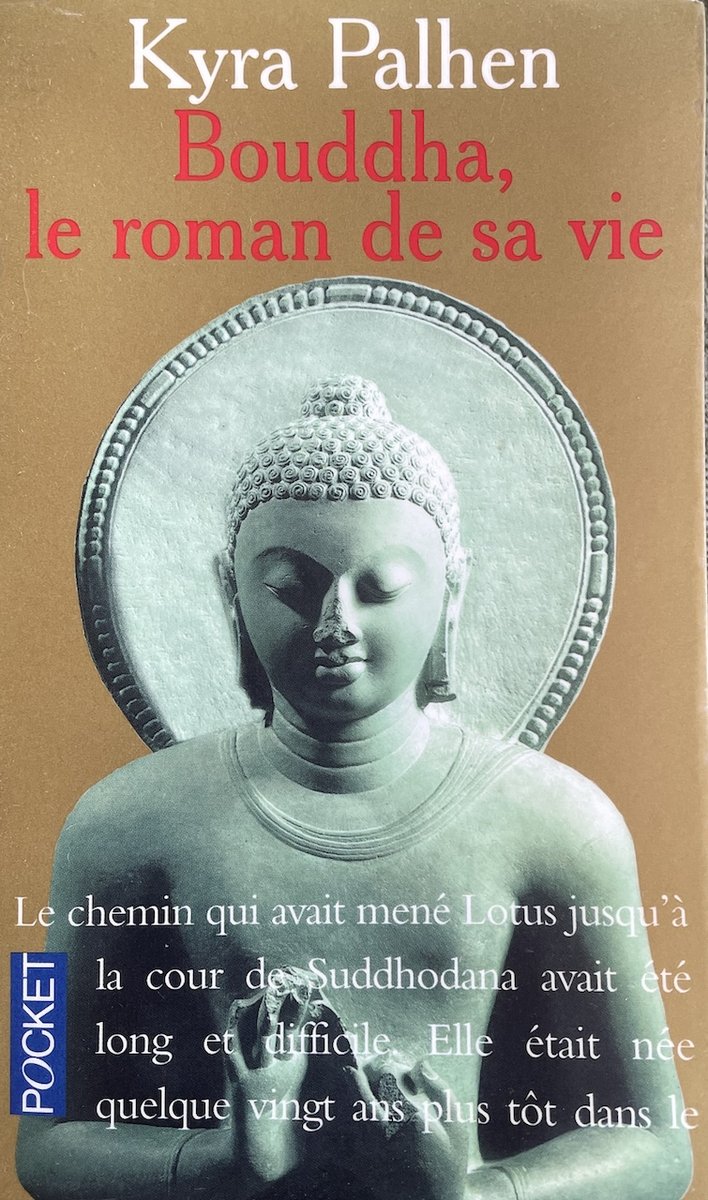
Bouddha, le roman de sa vie, Pocket
PocketFrance and French-speaking countries
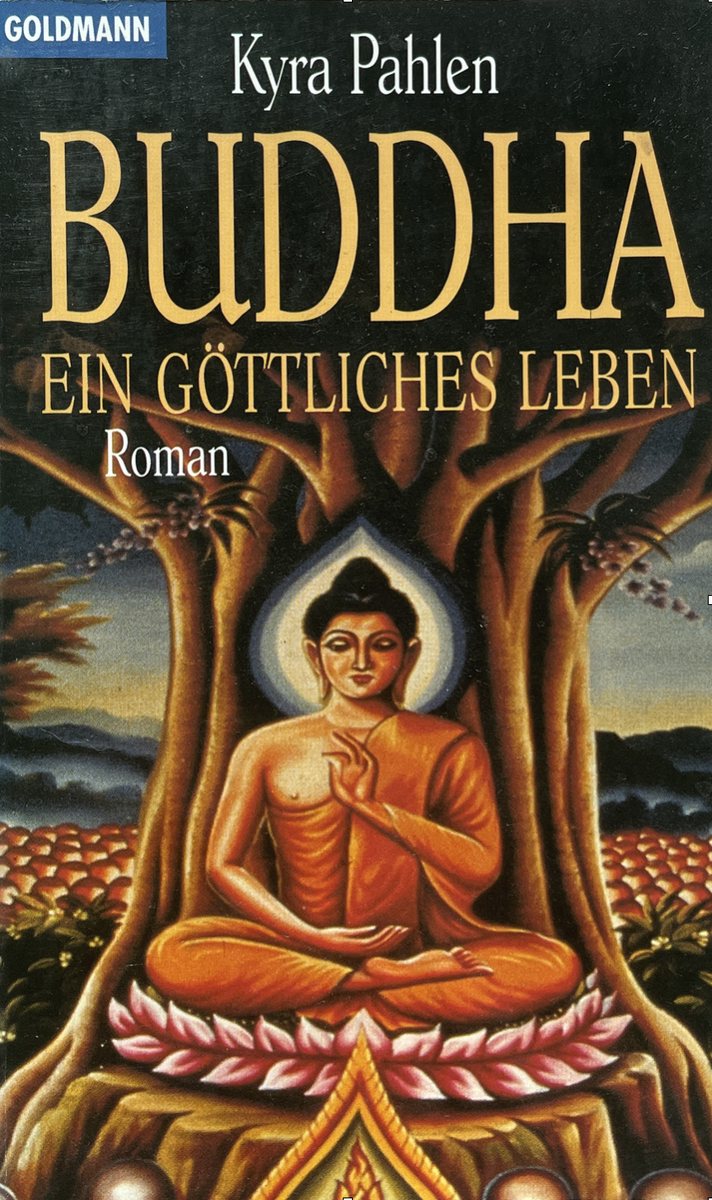
Buddha, ein göttliches Leben, Goldmann
Goldmann, BertelsmannGermany and German-speaking countries
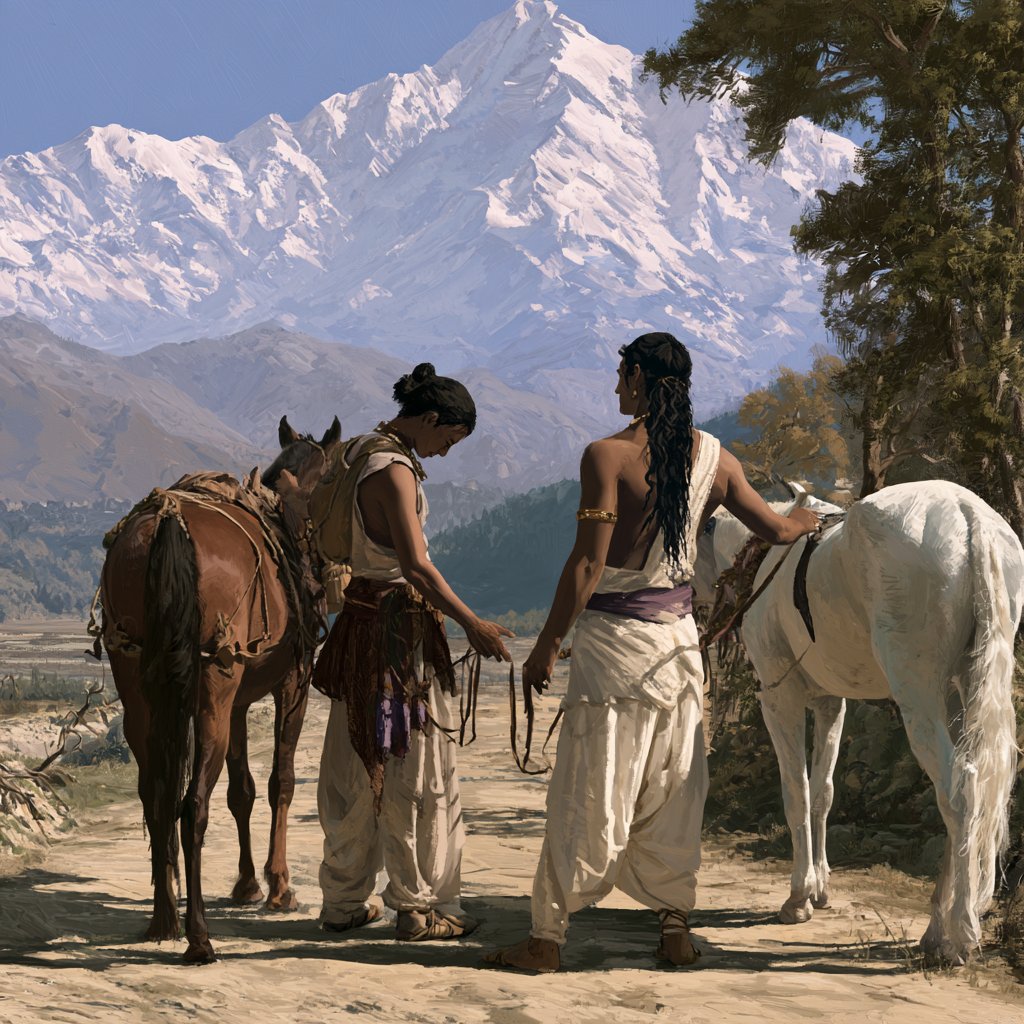
Siddhartha hands his possessions to Chandaka on the road below the mountains

A personal note

I grew up when quality was the goal and not quantity. We now live inside a machine built to make us want things, most of which we do not need and the planet cannot carry.

What the Buddha called non-attachment is not a retreat from the world. It frees you from believing that objects are needed. It sounds like a small idea. It is not, and it is the reason this man has held my attention for thirty years. I have abided by his words, and that has made every loss so much easier to survive.

The author

Kyra Pahlen is a novelist, screenwriter and international media entrepreneur. Born in London to a White Russian film producer father and an Austrian mother who introduced Latin American music to the German-speaking countries, she has worked in film production with Alexander Salkind (Superman I and II), as General Manager of Atalanta Films Japan, sold a project to Miramax, and as founder of ZING Technologies and its LegendHQ platform.

Her other published work includes Crypto: The Future of Money (Le Lombard, 2019), winner of the Prix Lycéen. She first heard about the Buddha through her mother's bedtime stories about Zen archery, growing up between London, Paris, Vienna and Rome. Her real editors are small, furry and deeply unimpressed.

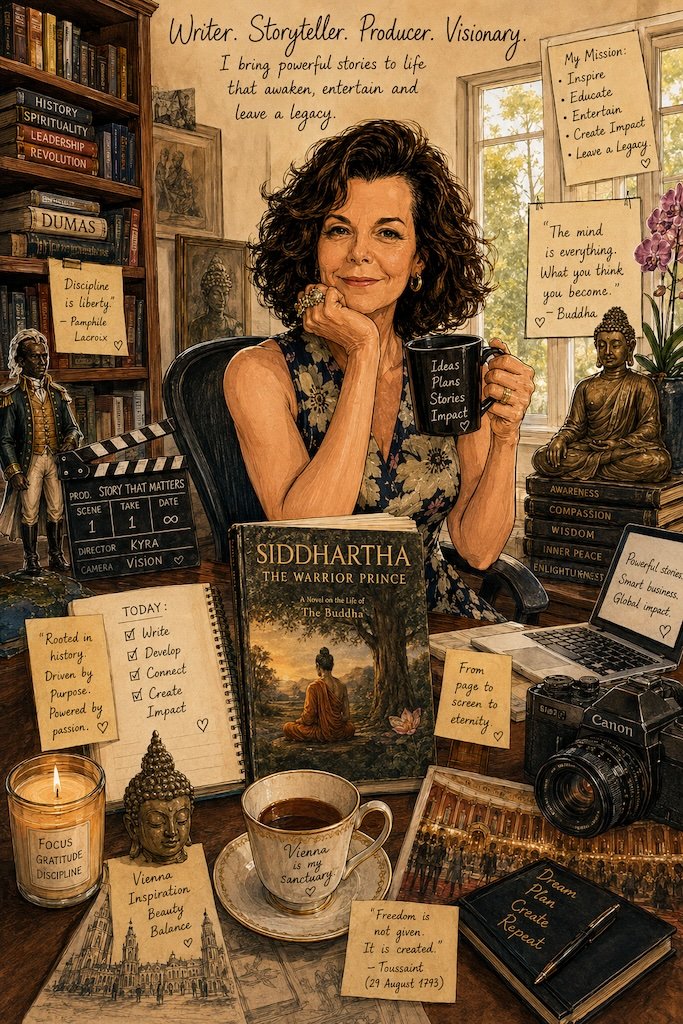
Kyra Pahlen at her desk, illustrated portrait
Category
Literary historical fiction
Length
About 120,000 words, complete
Rights
All language rights are now available
Spanish editions
Ediciones B, Espasa Calpe, Planeta
French editions
Nil Editions, Robert Laffont, Pocket
German edition
Goldmann, Bertelsmann
Film rights
Not available